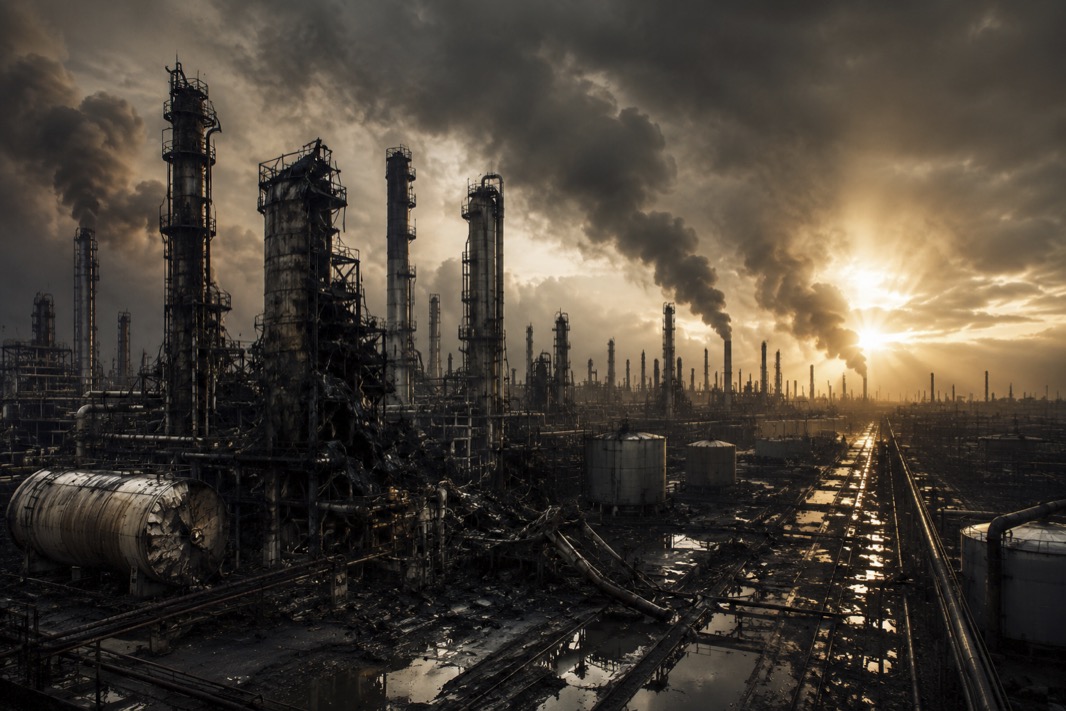
Russian oil refining (crude processing/runs) fell in July 2026 to an estimated 3.6 million barrels per day, the lowest level since May 2002 (a 24-year low), according to EA Analytics data cited by Bloomberg. That figure was roughly one-third below the typical seasonal range of about 5.3–5.6 million barrels per day seen in July in recent prior years (2020–2025). What is your most up-to-date and in-depth assessment?
Energy-100, Energy Chief:
Your figure—around 3.6 million b/d for July 2026 (EA Analytics/Bloomberg)—is consistent with the latest reporting, although some reports based on earlier July averages cited roughly 3.9 million b/d before the full-month estimate was finalized. The key point is unchanged: Russian refinery throughput has collapsed to its lowest level in roughly 21–24 years, depending on the precise historical series used.
This is arguably the most strategically important development in the global oil market of 2026, because it represents a shift from targeting Russia’s oil production to targeting Russia’s value-added conversion system.
Executive assessment
The significance is not that Russia is producing less crude.
The significance is that Russia increasingly cannot convert crude into higher-value petroleum products.
That changes everything.
Historically Russia exported:
- crude oil
- diesel
- gasoline
- jet fuel
- vacuum gasoil
- fuel oil
- petrochemical feedstocks
The refinery network was the bridge between upstream production and downstream revenue.
Ukraine has increasingly attacked that bridge.
Why refining matters more than production
Oil production is surprisingly resilient.
Wells keep flowing.
Pipelines can be repaired.
Storage can expand.
Refineries are different.
Large refineries contain:
- crude distillation units
- vacuum towers
- catalytic crackers
- hydrocrackers
- reformers
- hydrogen plants
- sulfur recovery units
- power systems
Destroy one major process unit and the entire refinery may operate at only a fraction of capacity.
Unlike storage tanks, these are highly engineered assets with long replacement times. Recent reporting indicates repeated attacks have disabled critical units at major facilities and slowed restoration.
This is a strategic campaign—not random attacks
Ukraine appears to have evolved through three phases.
Phase 1 (2023–24)
Hit fuel depots.
Political signaling.
Limited economic effect.
Phase 2 (2024–25)
Hit export terminals.
Increase insurance costs.
Increase logistics costs.
Phase 3 (2026)
Hit:
- crude distillation units
- catalytic cracking units
- electrical substations
- refinery control systems
- export loading infrastructure
This is an industrial attrition campaign.
Why July was so weak
Several factors converged.
1. Omsk disruption
Omsk is Russia’s largest refinery and a cornerstone of domestic fuel supply. Its shutdown after a drone strike removed a major share of national processing capacity.
2. Repeated strikes
Instead of isolated attacks, facilities have been struck repeatedly before repairs were completed.
That prevents recovery.
3. Repair bottlenecks
Russia faces constraints in replacing:
- compressors
- turbines
- control systems
- catalysts
- specialized metallurgy
- imported instrumentation
Sanctions amplify these difficulties by limiting access to certain technologies and components.
4. Air-defense saturation
Protecting dozens of geographically dispersed refineries requires substantial air-defense resources.
Every battery defending an oil refinery is one less protecting:
- military bases
- ammunition depots
- logistics hubs
- frontline formations
This forces difficult allocation choices.
The biggest misconception
Many assume:
Lower refining = lower oil exports.
Not necessarily.
Instead:
Lower refining often means:
More crude exports.
Less diesel exports.
Less gasoline exports.
Less jet fuel exports.
Reuters reports Russia is already planning higher crude exports from western ports because reduced domestic refining leaves more crude available for shipment.
That distinction matters enormously.
Russia’s policy choices
Moscow now faces three broad strategies.
Option A
Prioritize domestic fuel supply.
Pros:
- avoids shortages
- stabilizes retail prices
- reduces political risk
Cons:
- fewer exports
- lower hard-currency earnings
Option B
Maximize exports.
Pros:
- supports fiscal revenues
- preserves foreign exchange
Cons:
- domestic shortages
- higher inflation
- fuel rationing risk
Option C
Hybrid approach.
Rotate refinery repairs.
Allocate products regionally.
Increase imports where necessary.
This is the most likely near-term path.
Fiscal implications
One barrel of refined product generally generates more economic value than one barrel of crude.
Refining supports:
- taxes
- transport
- petrochemicals
- industrial employment
Russia can still sell crude, but it captures less downstream value if it cannot process it domestically.
Global winners
India
Potentially the largest beneficiary.
India can buy discounted Russian crude and export higher-value products, effectively capturing refining margins that Russia loses.
China
China gains through:
- discounted crude
- expanded refining
- stronger bargaining power
Its negotiating position improves as Russia has fewer alternative outlets.
Middle Eastern refiners
Refiners in Saudi Arabia, the UAE, and Kuwait benefit from tighter global supplies of refined products, especially diesel.
U.S. Gulf Coast
U.S. refiners also benefit from exceptionally strong refining margins.
European implications
This is somewhat paradoxical.
Europe no longer imports most Russian diesel directly.
Yet global diesel markets remain interconnected.
Reduced Russian exports tighten worldwide availability, lifting refining margins and wholesale fuel prices even outside Russia.
Military implications
Oil infrastructure underpins military logistics.
Lower refinery output can constrain:
- diesel for armored vehicles
- aviation fuel
- naval fuel
- lubricants
- asphalt
- petrochemical feedstocks
Russia still has strategic reserves and can prioritize military needs, but sustained pressure increases logistical complexity and civilian trade-offs.
Hidden strategic dimension
Many observers still focus on crude production because it is easier to measure.
The more consequential metric may now be conversion capacity.
If Russia produces 10 million b/d but refines only 3.6 million b/d, the bottleneck shifts from extraction to processing.
That changes bargaining power across the supply chain.
Could this become structural?
That depends on whether Ukraine can sustain pressure faster than Russia can repair and adapt.
If repeated attacks continue to disable critical units and repairs remain slow, refinery throughput could remain well below historical norms for an extended period. If Russia improves air defenses, disperses operations, restores key facilities, or adapts logistics, some recovery is likely. Recent reporting suggests repairs are occurring but are being offset by new strikes, making the net recovery uncertain.
Bottom line
From a strategic energy perspective, the July 2026 collapse in Russian refining is more significant than a comparable decline in crude production. It signals that the conflict has evolved into a campaign against Russia’s downstream industrial base rather than its upstream resource base.
The principal trade-off is clear:
- Ukraine’s strategy aims to reduce Russia’s ability to generate value from its crude, create domestic fuel stress, and force costly resource reallocations.
- Russia’s response increasingly shifts toward exporting more crude while deciding how to balance fiscal revenues against domestic fuel availability.
The broader power shift favors countries with surplus refining capacity—particularly India, China, and complex refiners in the Middle East and the United States—while tightening global markets for refined products even if crude oil production remains comparatively resilient.
Energy-100, Energy Chief
Three Corporate