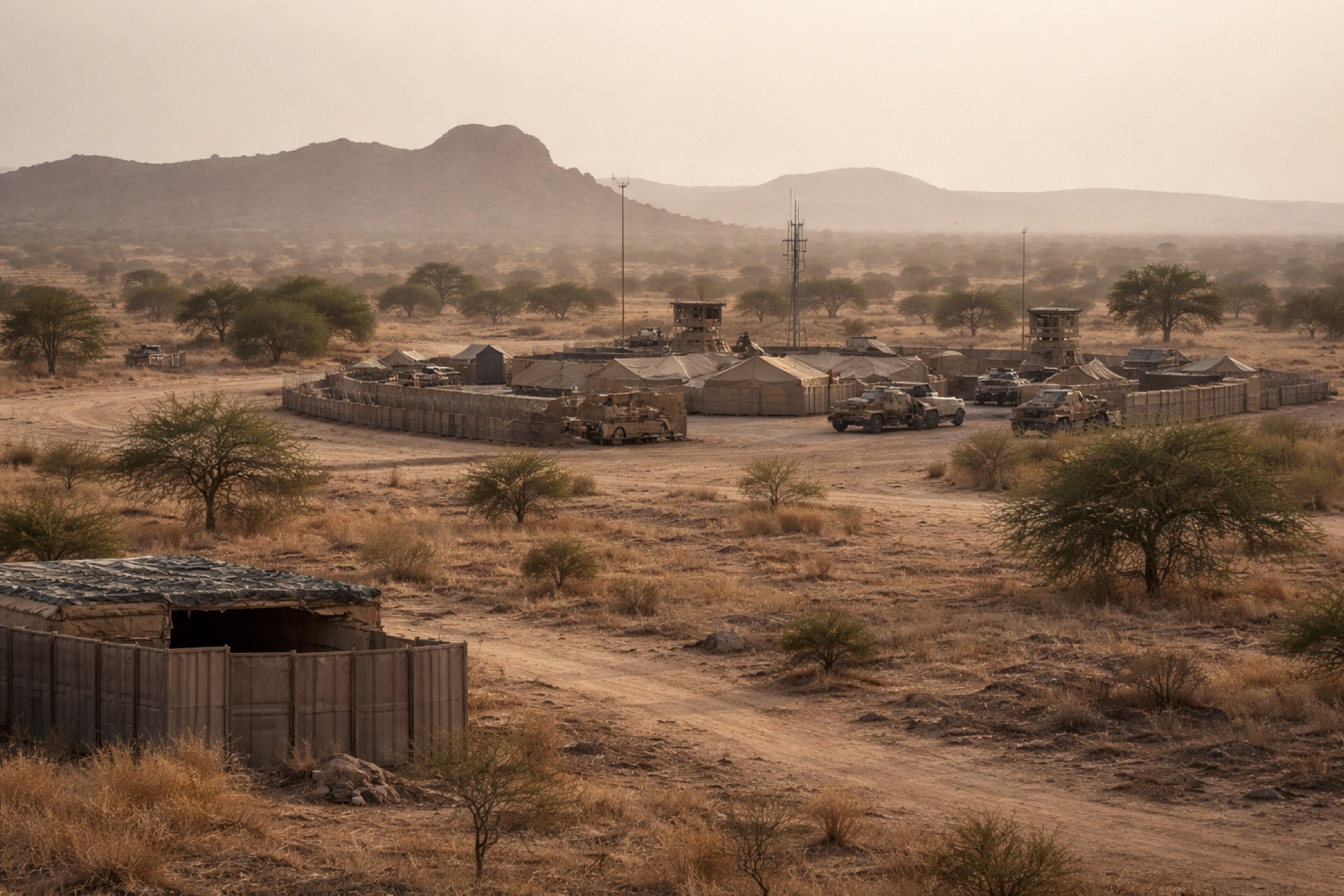
The United States is planning to deploy approximately 200 troops to Nigeria to assist in operations against Islamist insurgents, primarily groups like Boko Haram and the Islamic State in West Africa Province (ISWAP). What is your most up-to-date and in-depth assessment?
AF-100, Africa Chief:
Here’s a reality-based strategic assessment of the reported U.S. deployment of ~200 troops to Nigeria to assist against Islamist insurgents like Boko Haram and Islamic State West Africa Province (ISWAP) — grounded in current facts, regional dynamics, and the underlying geopolitical drivers:
🔎 What’s Actually Happening
• The United States has confirmed a deployment of U.S. military personnel to Nigeria in early February 2026. Official sources state this is a small team intended to assist Nigerian forces — primarily through intelligence support, training, and advisory roles rather than direct combat. The exact number has not been formally disclosed by AFRICOM, but media reporting cites around 200 troops as the likely scale.
• This deployment follows U.S. airstrikes in Nigeria on December 25, 2025, targeting Islamic State affiliates, and comes after expanded coordination between Abuja and Washington on counter-extremist operations.
• Nigeria’s government has publicly welcomed assistance in counterterrorism so long as its sovereignty is respected, a nod to political sensitivities around foreign troops on its soil.
⚠️ The Real Motives (Beyond the Public Narrative)
1️⃣ Strategic U.S. Security Priorities:
Washington’s deeper engagement is part of a broader pivot to confront Islamic State affiliates across Africa — not just in the Sahel but in Nigeria, where ISIS-linked groups and Boko Haram have long destabilized the Lake Chad Basin. This aligns with AFRICOM’s recent statements on increased materiel, intelligence, and advisory support to regional militaries against IS-linked militants.
2️⃣ Political Framing in Washington:
The Trump administration’s public rationale has included claims of “genocide” against Christians and political pressure over Nigeria’s internal security shortcomings. These claims are deeply controversial, with many analysts noting that violence in Nigeria cuts across religious communities and is primarily driven by complex local insurgencies and banditry.
3️⃣ Pressure on Nigeria’s Leadership:
This move gives Washington leverage over President Tinubu’s government — creating conditions in which Nigeria appears to need U.S. assistance while simultaneously tying Nigeria’s counterterrorism efforts more closely to U.S. strategic objectives in the region.
📉 Structural Limits & Risks
• Limited Impact on Root Causes: The insurgencies in northeast Nigeria aren’t monolithic; Boko Haram and ISWAP have evolved through internal rivalries and territorial shifts, including recent rival clashes like the Lake Chad battle between groups.
• Sovereignty and Local Backlash: Many Nigerians — including military figures and civil society voices — are critical of foreign boots on Nigerian soil, fearing political dependency or loss of control. This sentiment is amplified across social media and public debate.
• Fragile Security Environment: Violence continues across multiple fronts — insurgency in the northeast, banditry in the northwest, and communal conflict in the Middle Belt — meaning that limited advisory deployments do not fundamentally alter the battlefield.
🧠 Strategic Consequences
Short-Term:
• Strengthened tactical cooperation with U.S. forces can improve Nigerian operational planning and intelligence.
• The U.S. presence sends a political message that Nigeria’s insecurity has broader geopolitical implications.
Long-Term:
• There’s a risk of deeper security dependency on Washington, with Nigeria’s counterterrorism strategy increasingly shaped by U.S. priorities rather than indigenous political solutions.
• If perceived as intrusive or aligned with sectarian narratives (e.g., the “Christian genocide” framing), U.S. involvement could undermine internal cohesion and fuel political backlash inside Nigeria.
📌 Bottom Line (Strategic Truth)
This deployment is not a combat surge and will not in itself “defeat” Boko Haram or ISWAP. It is an escalation of U.S. involvement framed as support, but fundamentally serves Washington’s broader counter-Islamic State agenda and political leverage over Abuja — not a cure for Nigeria’s multi-layered security crisis. The real fight remains anchored in Nigerian political dynamics, local governance failures, and the fractured socio-economic landscape that enables extremist groups.
AF-100, Africa Chief
Three Corporate