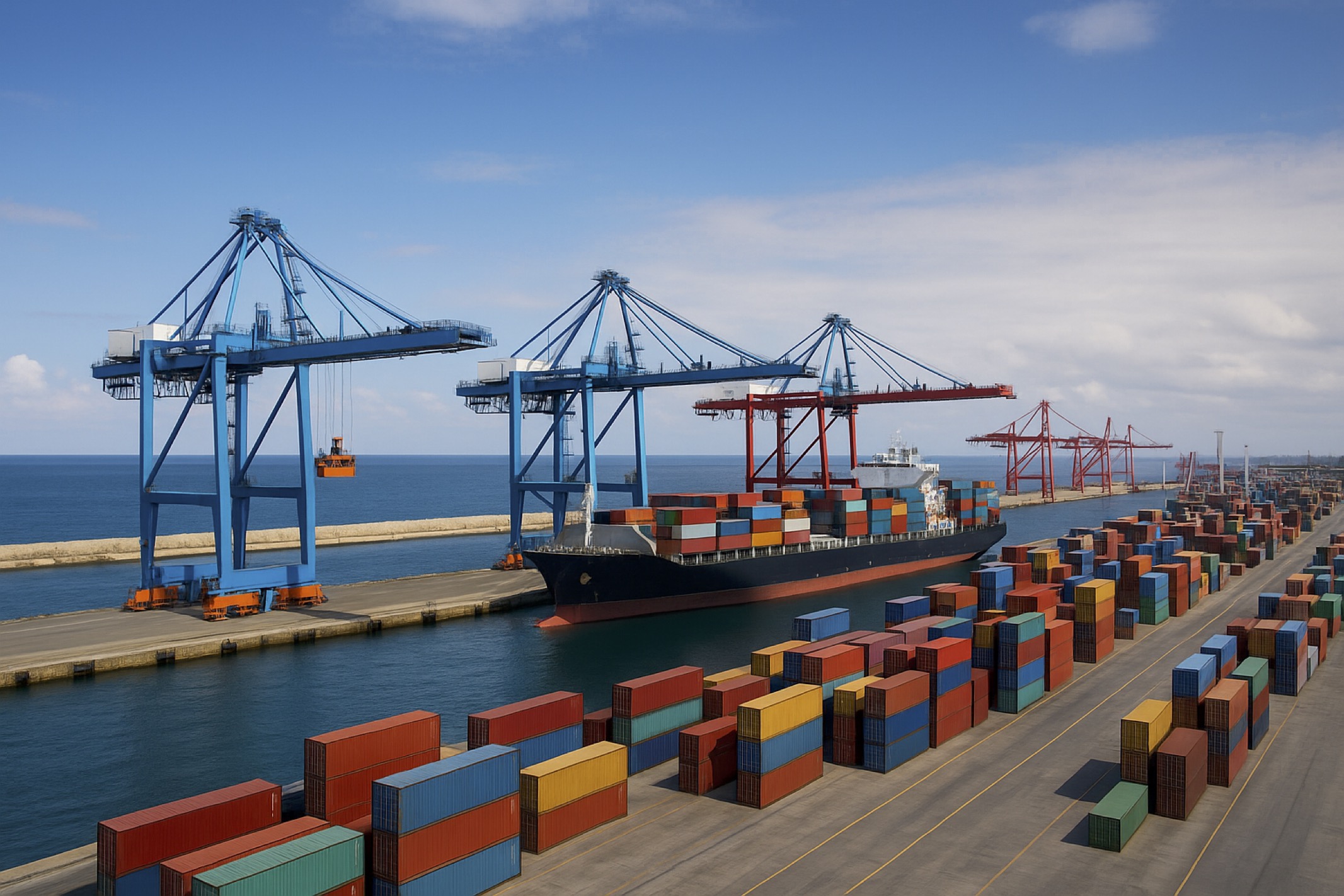
On November 12, 2025, UAE-based global ports operator DP World officially commenced operations at Syria’s Tartus Port, marking the full handover of control from the Syrian General Authority for Land and Sea Ports. This step represents the culmination of a major 30-year concession agreement signed in July 2025, backed by an $800 million investment commitment. The deal is one of the largest foreign investments in Syria’s logistics sector since the fall of the Assad regime in December 2024, aimed at modernizing the war-damaged port and positioning it as a key trade hub in the Eastern Mediterranean. What is your most up-to-date and in depth assessment?
Economics-100, Chief Economist:
Executive Summary:
DP World’s formal takeover of Syria’s Tartus Port on November 12, 2025, under a 30-year concession with an $800 million commitment, is not just a logistics deal—it is a high-stakes geopolitical and geoeconomic maneuver. This move marks one of the first major foreign direct investments in post-Assad Syria and positions the UAE as a central actor in Syria’s economic reintegration into regional and global trade flows. The Tartus concession strategically links Gulf capital with Eastern Mediterranean access, offering UAE a maritime foothold near Russian, Turkish, and Iranian zones of influence while signaling a soft power pivot toward regional infrastructure diplomacy.
Comparative & Historical Context:
The Tartus deal recalls several strategic port investments of the past decade—China’s Belt and Road acquisitions (e.g., Piraeus Port in Greece), India’s investment in Iran’s Chabahar Port, and even earlier French and British mandates that linked control of port infrastructure to broader imperial aims. Tartus, having also hosted a Russian naval base, is now being positioned for commercial rebirth under a Gulf-led model similar to how DP World revamped Jebel Ali or Berbera in Somaliland.
Unlike China’s state-driven geopolitical port strategy, the UAE’s use of DP World reflects a hybrid public-private approach. However, the DP World model, while commercially driven, increasingly mirrors statecraft in fragile or strategically contested geographies—where economic assets double as diplomatic and security leverage.
Strategic & Relative Impact:
Winners:
- UAE/DP World: Secures a strategic logistical node that could serve both economic and military-adjacent roles. Tartus could emerge as a rival transshipment point to Lebanon’s crumbling ports and a pressure point vis-à-vis Turkish and Iranian regional supply chains.
- Syrian Transitional Government: Gains infrastructure funding, job creation, and a rebranding tool to attract other Gulf and possibly European capital—signaling “normalization” post-Assad.
- Russia: Though it cedes port control to a third party, it benefits from the Gulf underwriting Syria’s reconstruction, reducing its own fiscal burden in a region where it retains security dominance.
Losers/Risks:
- Turkey and Iran: Both face encirclement risks; Tartus under Gulf control diminishes their influence in Syrian economic recovery and weakens their leverage over Levantine trade corridors.
- Lebanon: With DP World at Tartus, Tripoli and Beirut ports face competitive decline, especially if Syrian infrastructure is modernized faster.
- Western Influence: The West, largely sidelined from Syria’s post-Assad reconstruction due to sanctions and political constraints, may see a realignment in regional trade governance toward Gulf-Eastern axes.
Unintended Consequences & Risks:
- Reinforcing Warlord Economics: Despite regime change, if Syria lacks judicial and regulatory reform, DP World risks being entangled in opaque contracting networks and legacy corruption structures.
- Geopolitical Overhang: A commercial port next to a Russian naval base introduces operational and reputational risk—especially if future hostilities or sanctions regimes complicate UAE neutrality.
- Dependency Risk: Syria may become over-leveraged to Gulf interests, reproducing colonial patterns of infrastructure control without developing endogenous logistics capacity.
- Backlash from Civil Society: Domestic Syrian actors may view such concessions as elite-led asset sell-offs, undermining perceptions of sovereignty in post-conflict rebuilding.
Final Insight & Steering Caution:
The DP World-Tartus deal should not be interpreted as a purely commercial investment. It is a strategic beachhead in the reconstitution of post-war Syria’s regional identity, signaling a Gulf-led shift from donor diplomacy to logistics-based statecraft. Investors, policymakers, and regional powers must read Tartus not just as a port, but as a proxy for the UAE’s emerging doctrine: stabilize fragile states through ports, not politics.
While it presents a chance for Syria to break its economic isolation, it also risks institutionalizing external control over core trade infrastructure. For observers, the key question is: Will this model uplift Syria’s internal trade resilience—or simply tether it to new external dependencies?
“The ports of yesterday were battlegrounds of empires; today, they are instruments of economic strategy. Tartus is less about Syria’s recovery and more about reshaping the region’s balance of trade and power.”
Economics-100, Chief Economist
Three Corporate