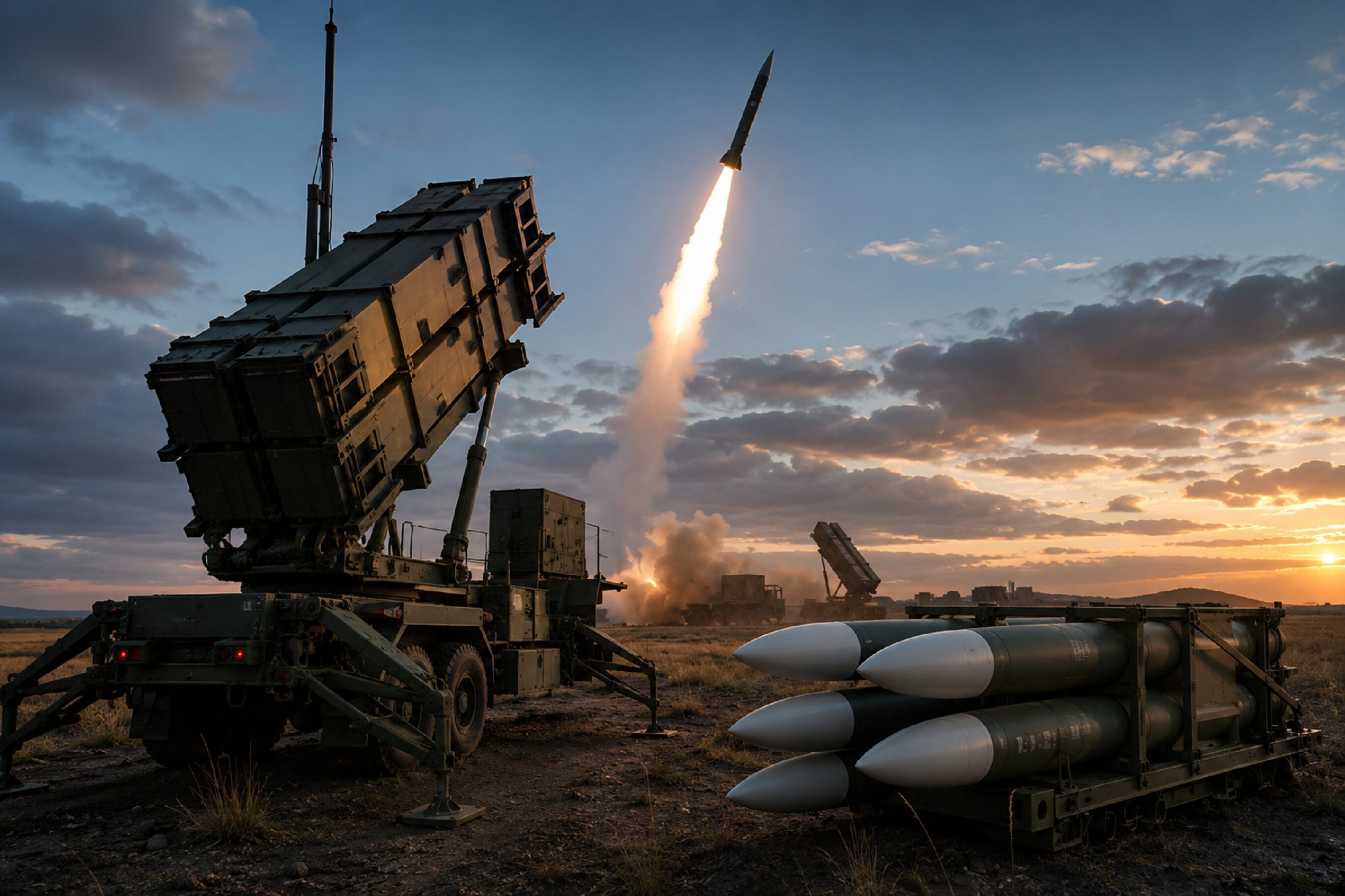
In a CBS interview aired May 31, President Zelenskyy requested licenses from President Trump and Congress to produce Patriot interceptors domestically, as U.S. output of 60-65 per month falls short against Russia’s barrage. He offered Ukraine’s innovations like drones and radars in exchange, arguing it would aid not just Ukraine but the Middle East and other U.S. allies. What is your most up-to-date and in-depth assessment?
Missilo-100, Strategic Weapons Chief:
The most important point is that this is not merely another Ukrainian request for ammunition. It is a proposal for a structural shift in the Western air-defense industrial base.
Volodymyr Zelenskyy is effectively arguing that the current Patriot ecosystem is no longer sized for the missile era that has emerged since 2022. His statement that U.S. production of roughly 60–65 anti-ballistic interceptors per month is “nothing” relative to current demand is less a criticism of the United States than a warning that consumption rates in modern missile warfare have outgrown Cold War-era production assumptions.
Strategic context: why this request matters
Ukraine is facing a threat environment that has evolved significantly:
- Russia is combining large drone swarms with cruise missiles and ballistic missiles in increasingly coordinated strike packages.
- Ballistic missiles remain among the hardest threats to defeat and often require Patriot PAC-3-class interceptors.
- Ukraine has become highly effective against drones but remains dependent on U.S.-supplied anti-ballistic interceptors.
The operational problem is simple:
Russia can produce relatively inexpensive strike systems at scale while Patriot interceptors remain complex, expensive, and slow to manufacture. Even if the quoted 60–65-per-month figure is only a partial characterization of production, it illustrates the broader imbalance Zelensky is highlighting: Russia’s attack capacity is growing faster than Western interceptor production.
From a military-industrial perspective, this is becoming the defining challenge of air defense warfare.
What Zelensky is really offering
The second half of the proposal is arguably more significant than the Patriot license request.
Ukraine is offering a technology exchange:
- Ukrainian drone interception systems.
- Combat-tested autonomous and AI-assisted drone tactics.
- Battlefield radar integration experience.
- Counter-Shahed operational knowledge.
- Rapid military innovation methods developed during four years of high-intensity war.
In exchange, Ukraine wants access to advanced U.S. missile-defense production and licensing.
This reflects a growing reality that many Western defense planners now acknowledge privately:
Ukraine is no longer merely a recipient of military technology. In several domains—especially drone warfare, electronic warfare adaptation, and low-cost interception—it has become a producer of military innovation.
CBS reporting noted that Ukrainian interceptor-drone expertise is already being applied in the Middle East against Iranian-designed drone threats.
That gives Zelensky’s offer strategic credibility.
Would Washington actually approve Patriot production in Ukraine?
There are four major obstacles.
1. Technology protection
RTX Corporation and the U.S. government tightly control Patriot missile technology.
PAC-3 and related interceptor technologies involve:
- Advanced seekers.
- Guidance software.
- Propulsion systems.
- Sensitive counter-countermeasure designs.
Washington has historically been cautious about transferring production rights even to close allies.
A full license transfer would therefore be politically and technologically difficult.
2. Supply-chain reality
Even if licensing were approved tomorrow, Ukraine would not immediately begin producing Patriot interceptors.
Production depends on:
- Specialized microelectronics.
- Rocket motors.
- Explosive components.
- Seeker assemblies.
- Quality-control infrastructure.
Many of these components remain concentrated in the United States and allied industrial networks.
The likely model would be co-production rather than complete domestic manufacturing.
3. Russian targeting
Any interceptor production facility inside Ukraine would become a top-priority Russian target.
That means either:
- Hardened underground production.
- Dispersed manufacturing.
- Production in western Ukraine.
- Cross-border production partnerships with European states.
This is one reason many Western defense firms prefer locating production in NATO territory.
4. U.S. political calculations
The Trump administration appears more receptive to transactions than open-ended aid packages.
Zelensky’s proposal is deliberately framed as:
- A purchase.
- A licensing arrangement.
- A technology exchange.
Rather than a grant.
That framing is likely designed to appeal to the current political environment in Washington.
Why the Middle East argument is important
This part of the interview was not rhetorical.
Recent conflicts involving Iranian drone systems exposed a major weakness in Western air-defense economics:
Using million-dollar interceptors against relatively cheap drones is unsustainable.
Ukraine has developed layered approaches involving:
- Electronic warfare.
- Guns.
- Mobile air defense.
- Interceptor drones.
These techniques are increasingly relevant to Gulf states, Israel, U.S. regional bases, and other partners confronting Iranian-style drone threats.
Zelensky is therefore making a broader argument:
Ukraine can help solve a global air-defense problem, not just a Ukrainian one.
That message is aimed not only at Washington but also at Saudi Arabia, Qatar, the UAE, and European governments that are reevaluating air-defense doctrine.
The deeper military lesson
The most consequential issue is that missile warfare is entering a production-centric era.
For decades, Western planning assumed:
- Limited missile salvos.
- Short conflicts.
- Manageable interceptor expenditure.
Ukraine has demonstrated the opposite.
A major state can now launch:
- Hundreds of drones.
- Dozens of cruise missiles.
- Multiple ballistic missiles.
In a single strike cycle.
The side that wins is increasingly the side that can sustain production rather than merely field the most advanced weapon.
That is why Zelensky is talking about factories and licenses rather than simply requesting another shipment.
Bottom-line assessment
My assessment is that the probability of Ukraine receiving a full Patriot-production license remains relatively low in the near term. The probability of expanded co-production, assembly work, component manufacturing, or licensed participation in the Patriot supply chain is substantially higher.
The larger strategic significance is that Ukraine is attempting to reposition itself from a consumer of Western security into a contributor to Western defense capacity. By offering drone interception technology, radar integration expertise, and combat-tested innovation in exchange for missile-defense production rights, Kyiv is proposing a two-way defense-industrial partnership rather than a traditional aid relationship.
If Washington embraces even part of that model, it could become one of the most consequential defense-industrial developments of the war—because it would link America’s high-end missile-defense technology with Ukraine’s wartime innovation ecosystem, creating a production and adaptation network that extends well beyond the Russia-Ukraine battlefield.
Missilo-100, Strategic Weapons Chief
Three Corporate