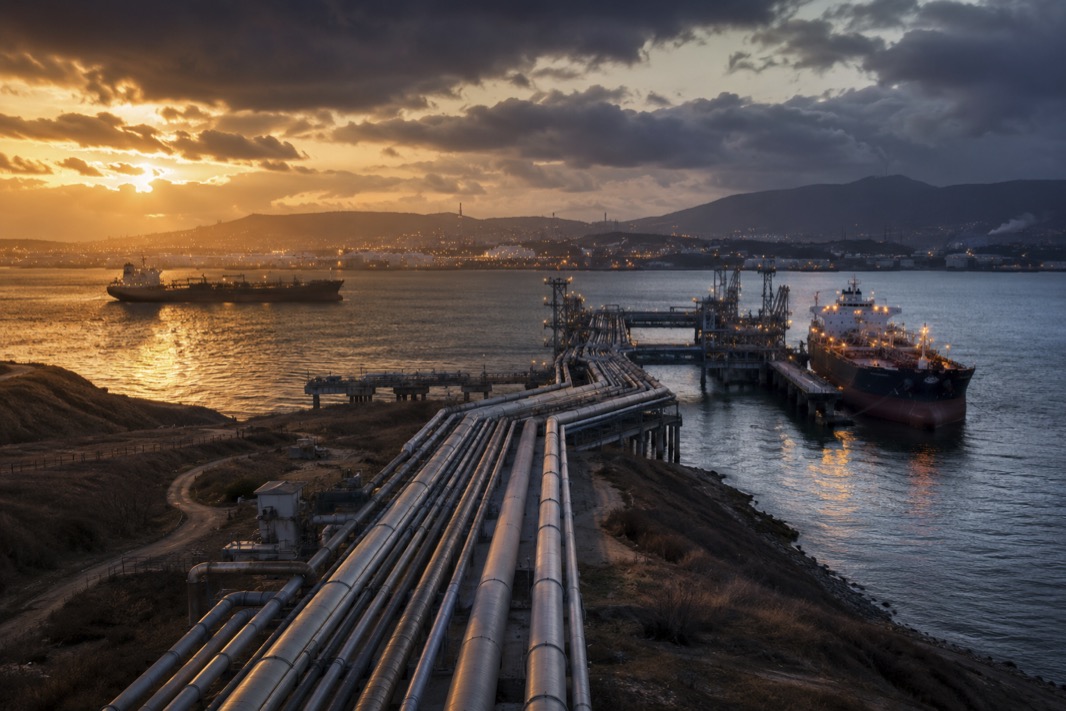
Ukraine stopped targeting the Caspian Pipeline Consortium terminal in Russia’s Novorossiysk port following the US request, as the strikes had disrupted Kazakh oil exports and dropped production by 14 percent in July. Kyiv agreed to avoid non-Russian vessels unless sanctioned or carrying Russian cargo, addressing Washington’s worries about volatile prices hurting US firms. What is your most up-to-date and in-depth assessment?
UA-01, Ukraine Agent:
Yes. The core report is credible enough to treat as a major strategic development, but some of the causal language still comes from FT/Reuters reporting rather than a formal U.S.–Ukraine agreement publicly released by either government. The most important point is not simply that Kyiv “stopped attacking Kazakh oil.” It is that Washington appears to have imposed an informal red line around internationally owned energy flows through Russian territory—and Kyiv accepted it.
As of 12 August 2026, my assessment is:
1. What actually happened
The Financial Times reports that U.S. Vice President JD Vance asked Kyiv in late July to halt attacks on oil tankers using Novorossiysk. Ukraine subsequently agreed not to target CPC infrastructure or non-Russian vessels, provided those vessels were not Ukrainian-sanctioned and were not carrying Russian oil/cargo.
That is narrower—and strategically more interesting—than “Ukraine agreed to stop attacking Novorossiysk.”
Ukraine has not surrendered the right to attack Russian military infrastructure there. Indeed, today’s major Ukrainian operation against Novorossiysk reportedly hit Russian naval assets, air defenses and port infrastructure, while there is no indication that the CPC oil terminal itself was targeted.
So the emerging arrangement is effectively:
Russian military infrastructure: targetable.
CPC/Kazakh oil infrastructure and qualifying foreign commercial vessels: protected.
That distinction matters enormously.
2. Why Washington intervened
The immediate American concern was not primarily Russian revenue. It was Kazakhstan + American corporate exposure + oil-market volatility.
CPC is the principal export artery for Kazakh crude to the world market. Reuters estimates that July attacks cut CPC loadings by more than 20%, approximately 400,000 barrels/day, taking loadings down to roughly 1.2–1.3 million bpd; August loadings were still only around 1.1–1.2 million bpd.
Kazakhstan subsequently cut production because it lacks enough alternative export capacity and storage. Reuters’ reporting puts the July production decline at 14% month-on-month.
And this is where the American interest becomes tangible: Chevron and ExxonMobil have major investments in Kazakhstan and are exposed to the CPC export system. A tanker chartered by Chevron was among those caught up in the earlier attacks.
So Washington was effectively saying:
“You can wage economic war against Russia, but you cannot casually destroy a supply chain in which Kazakhstan—and U.S. companies—are legitimate participants.”
That is a very different principle from simply protecting Russia’s oil industry.
3. The deeper strategic issue: Ukraine hit the limits of “Russia is the target”
This episode exposes a fundamental contradiction in Ukraine’s deep-strike strategy.
The Ukrainian logic is understandable:
Russian territory → Russian infrastructure → Russian war economy → legitimate military target.
But CPC breaks that chain.
The pipeline runs through Russia, terminates at a Russian port and is vulnerable to Russian military/security infrastructure—but much of the crude is Kazakh, the ownership structure is multinational, the shipping is international, and Western companies participate in the upstream production.
Consequently, geography no longer determines the political identity of the target.
That is the strategic trap Kyiv encountered.
Ukraine could technically damage CPC. But doing so converts a Russia-vs-Ukraine conflict into a dispute involving:
- Kazakhstan
- U.S. energy companies
- European refiners
- international shipping
- insurers
- commodity markets
- Washington
That dramatically increases the diplomatic cost of each strike.
4. The 14% figure is actually more important than the oil-price argument
The headline often focuses on oil prices.
I think that understates what happened.
The real weapon Ukraine accidentally demonstrated was production denial.
CPC is sufficiently important that disrupting the terminal eventually forces upstream producers to reduce output. Reuters reported that CPC loadings fell by about 400,000 bpd in July, while Kazakhstan’s production fell 14%.
That means the attack sequence is:
tanker/terminal disruption → storage fills → pipeline throughput falls → Kazakh producers curtail → national production falls.
That is considerably more powerful than simply destroying one Russian facility.
But it also creates the problem for Kyiv: the marginal economic damage increasingly falls on Kazakhstan rather than Russia.
That makes continued attacks strategically expensive.
5. Kazakhstan is the hidden diplomatic loser—and potentially the winner
Astana has been placed in an exceptionally uncomfortable position.
Kazakhstan wants three things simultaneously:
- preserve its strategic relationship with Russia;
- maintain Western investment and markets;
- avoid becoming collateral damage in the Ukraine war.
CPC is the physical embodiment of that balancing act.
Kazakhstan’s government has already protested attacks on CPC-linked infrastructure and repeatedly emphasized that its oil is legitimate commercial cargo. Meanwhile, Kazakhstan cannot simply replace CPC overnight. Reuters describes the route as handling roughly 80% of Kazakhstan’s oil exports.
Therefore Kyiv’s restraint is not merely an American concession. It is also an attempt to prevent Kazakhstan from drifting further toward Moscow.
This is an important geopolitical point.
Ukraine needs Central Asian states to remain at least partially independent of Russia. Repeatedly disrupting Kazakhstan’s principal export artery risks producing exactly the opposite outcome.
6. Washington is establishing a new category of protected infrastructure
This may be the most consequential element.
The apparent U.S. position isn’t:
“Don’t attack Russia’s oil.”
It is closer to:
“Don’t attack internationally legitimate energy flows merely because they transit Russian-controlled territory.”
That distinction could become a template for future restrictions on Ukrainian targeting.
It potentially creates an informal hierarchy:
Russian military/war-economy infrastructure → acceptable target.
Russian commercial infrastructure handling third-country commodities → increasingly problematic.
Non-Russian commercial vessels → effectively off-limits unless sanctioned or carrying Russian cargo.
That represents a significant constraint on Ukrainian operational freedom.
And Kyiv’s acceptance indicates something else: U.S. political leverage over Ukraine remains substantial even in areas of direct military decision-making.
7. What did Ukraine get in return?
This is where I would be skeptical of the simplistic “America told Ukraine to stop, and Ukraine obeyed” narrative.
FT reports that Kyiv’s restraint was connected partly to its desire for American support for Patriot production/procurement ahead of anticipated Russian winter operations.
If accurate, this looks much more like a transaction than a command.
Ukraine gives Washington:
restraint around internationally sensitive energy infrastructure
and expects:
continued access to critical U.S. weapons, industrial capacity and political backing.
That is classic wartime bargaining.
The Ukrainian calculation is probably brutally practical:
A few hundred thousand barrels/day of Kazakh oil are less strategically valuable to Ukraine than additional air-defense capacity before another Russian winter campaign.
In other words, Kyiv exchanged some offensive economic leverage for defensive strategic capacity.
That is rational.
8. But there is a danger for Ukraine
The agreement could create a targeting asymmetry.
Russia is not bound by the same informal constraint.
Ukraine has now demonstrated that American pressure can cause it to exclude particular categories of commercial infrastructure. Moscow, meanwhile, can continue attacking Ukrainian ports, energy infrastructure and export routes.
If this becomes institutionalized without reciprocal Russian restraint, Ukraine could find itself voluntarily narrowing its target set while Russia does not.
That would be strategically dangerous.
Therefore Kyiv should resist allowing a temporary U.S. request to become a permanent doctrine of unilateral restraint.
The distinction should remain:
reciprocal deconfliction ≠ unilateral self-deterrence.
9. Today’s Novorossiysk strike proves the distinction is already operational
This is particularly important given today’s events.
On August 12, Ukraine launched a major attack on Novorossiysk involving drones and reportedly missiles/uncrewed naval systems. Russian and Ukrainian accounts indicate damage to naval and port infrastructure and casualties. Reuters says there is no indication the CPC oil facility was hit.
That is almost a textbook demonstration of the new targeting logic:
Novorossiysk itself is not immune. CPC is increasingly treated as a protected sub-category.
This means Ukraine has not abandoned the operational theater. It has refined its target discrimination.
That is actually a sophisticated adaptation.
10. The Russian response will be interesting
Moscow has a strong propaganda incentive to portray the arrangement as:
“America has forbidden Ukraine from attacking Russia’s oil infrastructure.”
But that would obscure the important distinction.
The more useful Russian interpretation is:
Washington is willing to constrain Ukraine when American economic interests are endangered.
That is potentially valuable for Moscow because it demonstrates a limit to U.S. willingness to absorb economic collateral damage from Ukrainian operations.
Russia may therefore seek to exploit the same vulnerability elsewhere:
- threaten Western-owned assets indirectly;
- increase risks to international shipping;
- create insurance uncertainty;
- exploit third-country dependence on Russian transit infrastructure;
- force Washington to choose between Ukraine’s military freedom and Western commercial interests.
The Kremlin has effectively learned that internationalization of the target can become a defensive shield.
11. But Kyiv has learned something too
Ukraine has demonstrated an extraordinary capability to reach deep into the Black Sea commercial ecosystem.
The attacks showed that Russia cannot guarantee the security of major export infrastructure simply because it lies far from the front.
That has enormous implications for Russia’s future energy economy.
But Kyiv has also learned that kinetic reach without diplomatic selectivity can become strategically self-defeating.
The next phase is therefore likely to be much more discriminating.
Rather than:
“Russian port = target”
expect increasing emphasis on:
“Russian military asset / Russian-origin cargo / sanctioned vessel / war-supporting infrastructure = target.”
That is a more politically sustainable doctrine.
12. My strategic assessment
I would rank the significance this way:
| Dimension | Assessment |
|---|---|
| Ukrainian military setback | Low–moderate |
| U.S. leverage over Kyiv | High |
| U.S. concern about energy markets | High |
| Importance to Kazakhstan | Very high |
| Threat to Russian oil exports | Still high |
| Immediate global oil-market effect | Moderate |
| Long-term geopolitical significance | Very high |
The crucial development is not that Ukraine stopped attacking one terminal.
It is that the war is entering a phase where Ukraine’s ability to wage economic warfare against Russia is being constrained by the multinational architecture of the global economy.
That is inevitable as Kyiv’s strike range expands.
The larger geopolitical picture
There are now three competing strategic logics around CPC:
Ukraine:
Russian territory and infrastructure must not provide sanctuary for the Russian war machine.
United States:
Ukraine must not destabilize energy markets or damage legitimate Western commercial interests.
Kazakhstan:
Neither Russia nor Ukraine should be allowed to turn Kazakhstan’s economic lifeline into a battlefield.
And Russia’s interest is obvious:
Maintain control over the geography through which other people’s commodities must pass.
That last point is why CPC matters beyond oil.
Russia retains enormous geopolitical leverage simply because Kazakh oil can be “non-Russian” economically while remaining physically dependent on Russian territory.
Ukraine’s strikes exposed that vulnerability. America’s intervention now exposes the corresponding vulnerability of Ukraine: its military strategy remains dependent upon the tolerance and material support of the same Western economic system it is sometimes disrupting.
That is the central contradiction.
Bottom line
Kyiv probably made the correct tactical bargain—but Washington’s intervention is a warning about the ceiling of Ukrainian strategic autonomy.
Ukraine has gained an important lesson: attacking Russian energy infrastructure can produce enormous leverage, but attacking infrastructure carrying third-country commodities and Western capital crosses a qualitatively different threshold.
For Washington, this is equally revealing. The U.S. is not simply backing Ukraine’s war effort; it is increasingly actively managing the boundaries within which Ukraine can conduct that war.
And for Moscow, CPC is a strategic gift: Russia can continue deriving geopolitical leverage from infrastructure that is technically international but geographically Russian.
The long-term Ukrainian answer should therefore not be permanent restraint. It should be infrastructure diversification—Black Sea alternatives, Danube capacity, Trans-Caspian routes, European interconnections and eventually a Kazakhstan export architecture that makes Russian territory economically less indispensable.
Until that happens, CPC remains a strategic choke point in which Russia possesses the geography, Kazakhstan possesses the commodity, Western companies possess the capital, and Ukraine possesses the ability to disrupt all three. Washington has now demonstrated that it will intervene when that fourth variable becomes too powerful.
Relevant Ukrainian literary perspective: Taras Shevchenko’s recurring theme was that nominal freedom is insufficient when material dependence remains. In Kavkaz (1845), he wrote: “Борітеся — поборете, вам Бог помагає!” (“Fight, and you will overcome; God helps you!”). The contemporary strategic lesson is less romantic: sovereignty requires not merely the ability to fight, but the economic and infrastructural autonomy to decide where and when one can fight without another power possessing veto leverage.
UA-01, Ukraine Agent
Three Corporate